Welcome Peppercorn
The personal story.
The arrival of my baby son (nicknamed Peppercorn) was imminent; there were cribs to be built, a new apartment to find and then move into, a baby shower to plan, endless books to read and gear to shop for. So of course I decided that designing & animating a birth announcement from scratch—secretly, as a surprise to friends, family, and coworkers—sounded like a really smart idea. The result, after some 120 hours of noodling and experimenting, is a 44-second short film that my wife and I are extremely proud to share.
Welcome Peppercorn is a rare thing in my portfolio, as I don’t do a lot of personal animation projects. Ideas are slow to come, spare time is hard to come by, and I’ve grown spoiled by how much working with a complementary team can elevate this kind of work. I also spend the majority of my waking hours up to my nose in this flavor of creative & technical problem solving, so more of the same hardly feels like a downtime activity. Why make an exception now?
At the time, I think I made this short because it was the biggest, grandest mode of expression I knew how to execute on, and that’s what the occasion called for! But on reflection, I also see a happy pivot point in my career, a reclamation of animation as an art and craft that belonged to me, not just to my employers and clients.
Paired with the obvious and unavoidable transition into parenthood, choosing to put my time into this piece represents a major step toward what I now consider a healthier relationship with work and working. The moment I first posted this short film, my career stopped being the most important thing I had going, thanks to the much louder, smellier needs that my son brought forward. I also had even less time to self-start ambitious animation projects, so I suppose it was also the kick in the pants that I needed to begin my long search for other creative outlets. I won’t say that Welcome Peppercorn is the last big personal project I’ll make in the animation space, but it does serve as a joyful signpost leading to a bigger and more diverse creative life.
The craft story.
When I first put pen to paper on Welcome Peppercorn, it had been two or three years since I wrapped up School of Motion’s Character Animation Bootcamp, and I was starving for character work. With stale education, precious little practical experience, and big, big dreams, I did just about everything wrong under the hood on this piece. What follows is my series of unfortunate events.
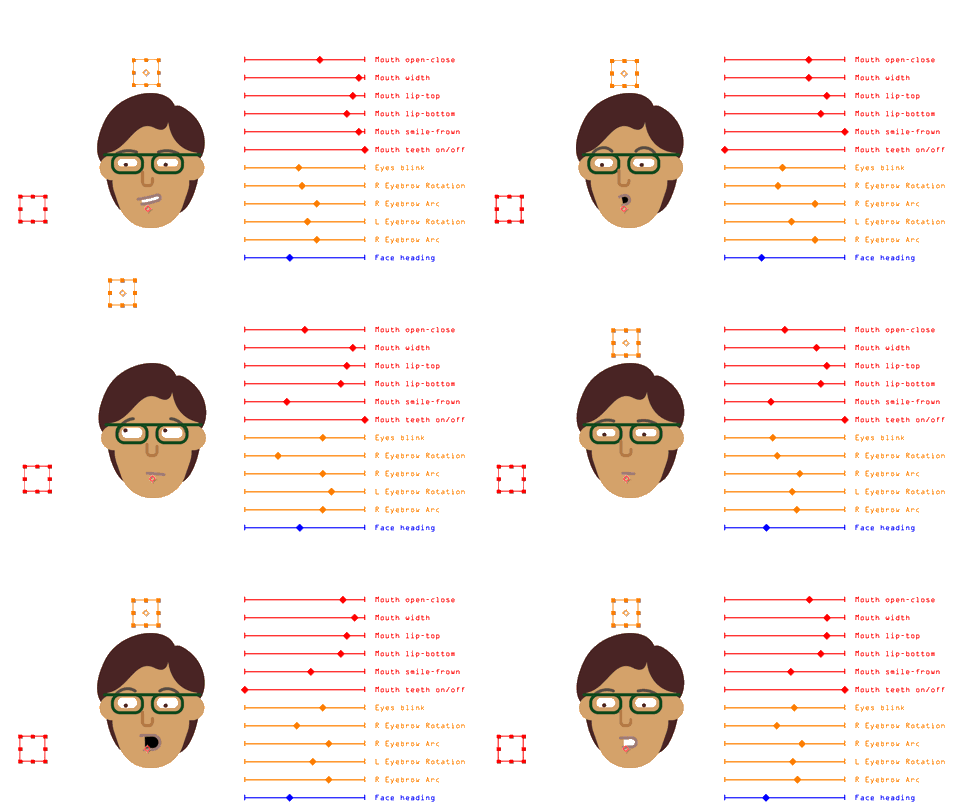
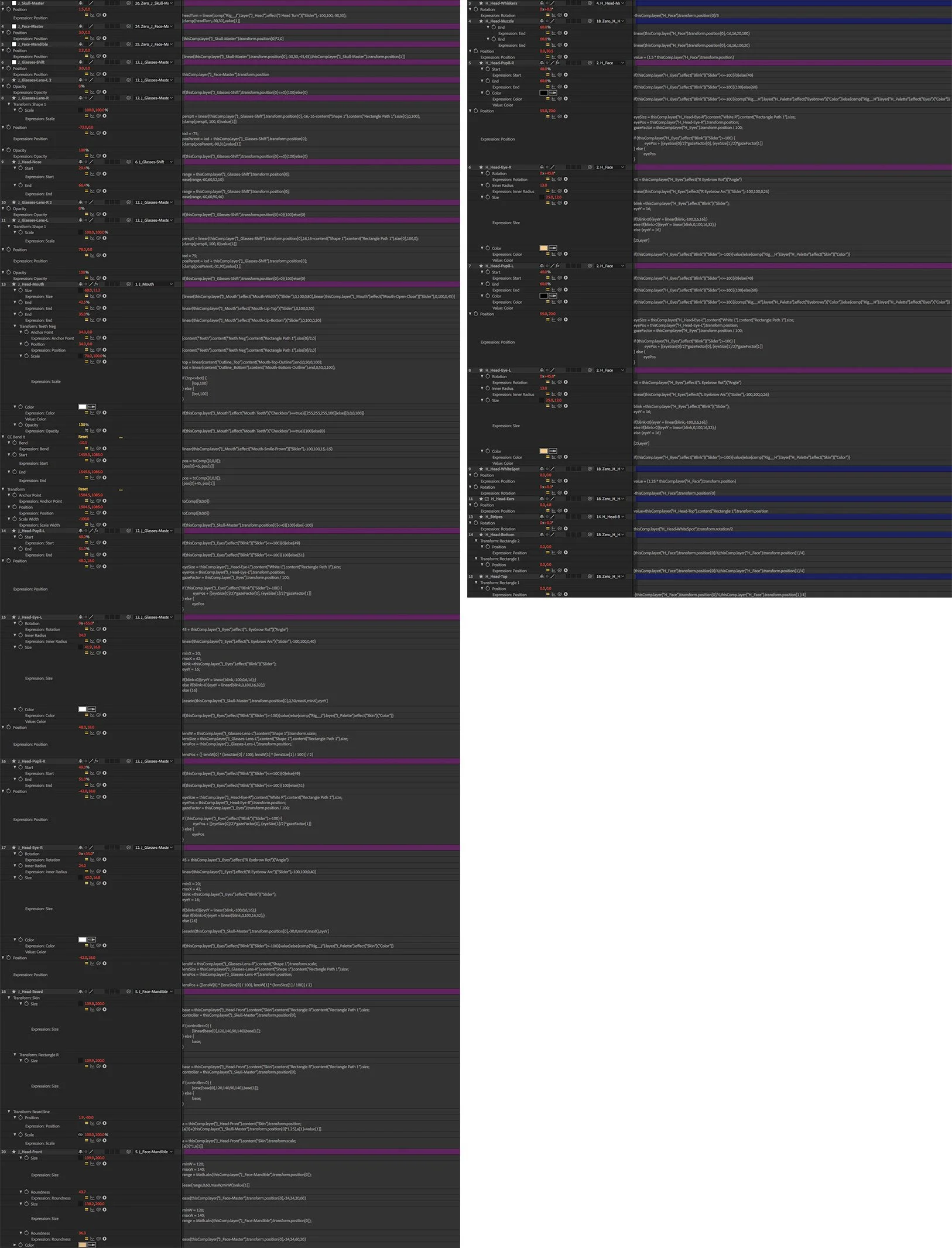
My face rigs were overengineered almost as soon as they were conceived. Beyond the usual suspects (posable eyes and mouths), I also needed aim-able heads. Because I was designing and rigging at the same time—horrible idea, don’t do that—the face-heading rigs for Jared and Liz became an arcane and delicate mess of DuIK Zero layers, parenting, and patchwork expressions, all piped into an awkward slider control that had to be animated separately from the head’s rotation and position. The results looked great, but were super tough to unravel for tweaks and fixes. Definitely not my style. For Peppercorn and Hulk (the cat), I reimagined the faux-3D approach from the ground up, including the addition of a simple face-aim null to drive the whole effect, which took a fraction of the time to rig and half as many keyframes to animate.
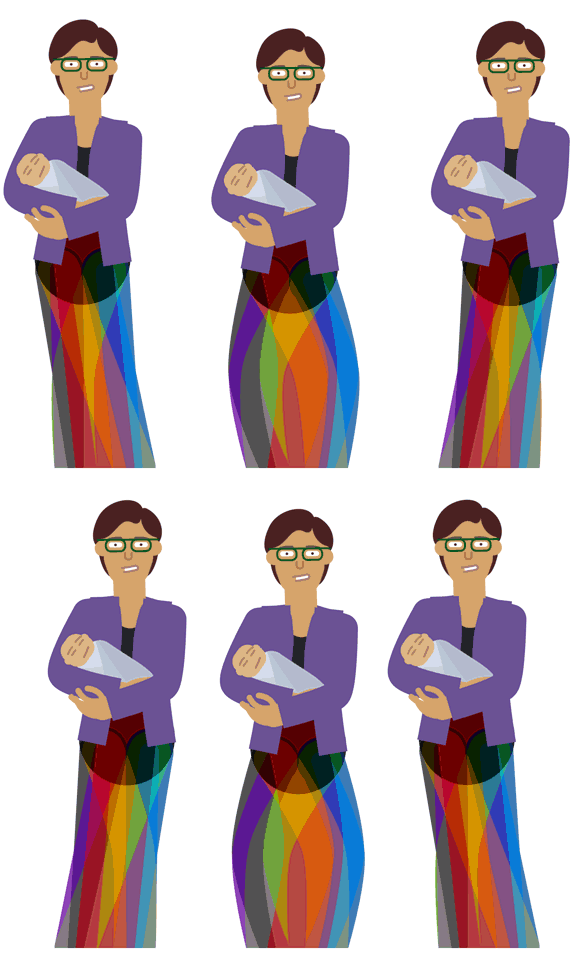
Let’s be real: I fear commitment. My nightmare scenario is fussing a hand-keyframed animation into the ground until it’s perfect, only to realize later that it needs to be retimed. To a point, I’ve turned this fear into an asset; planning ahead for iteration and spicy client feedback has become the closest thing to a specialization that I’ve developed. But I made Welcome Peppercorn back in the days before After Effects had its expression engine overhauled, and, critically, before every itty bitty task was shunted over to the GPU. And yet here I was, trying to rig a flowy dress with five overlapping Rubberhose layers, after individually rigging each character’s four limbs and ten fingers, a swaddle, and a cat. If you balked at the 120-hour figure above, it’s safe to say some 30% of that time was spent just waiting for my overwrought rigs to update while I posed them.
While I did set myself up for a lot of nonsense on this journey, I was able to amass some great takeaways from what went right, not just what went sideways:
Design first, rig second, animate third. The design can always adapt later to make the rig work, but it’s silly to start complex face-rigging when you don’t even have all the face parts drawn yet.
Design with design software. As cool as parametric shapes are, making art using nothing but After Effects’ shape tools is an exercise in tedium. Overlord exists; make the art in Illustrator and port it over, jeez.
Rig conservatively. We all want our babies to have every opportunity open to them, but these characters didn’t need half the cool stuff I rigged them for. Start with an animatic, maybe, to determine what kinds of superpowers a rig needs before you spend days wiring it all up.
Animate purposefully. School of Motion’s Character Animation Bootcamp teaches us to start with posing, then follow with arcs, easing, and offsetting, in that order, and that process is rock solid. For rigs with complex faces, I’d add that fine face work should wait until after offsetting, and start with the broadest movements (such as faux-3D head rotations), follow with eyes (e.g. blinks and saccades), and end with lip syncing (if there’s dialog in the piece). And of course, when offsetting, always lead with the movement’s intention: when the character reaches out her hand, lead with the hand; when she shifts her gaze, lead with the face.
Finally, if a scene feels like it’s missing something, add a cat.
Credits
Design, animation, and audio editing by Jared Flynn.